

Placement of compacted filtered tailings within the target range of the standard proctor curve: experimental results and operational implications
Diego Moreira da Silva a,[1], Alfredo Nunes da Silva Neto a, Mateus Viana de Nazare a, Washington Pirete da Silva a, Rodney Silva b, Rafaela Saar b, Andre Azevedo b
a BVP Engenharia, Brazil
b VALE, Brazil
[1] Corresponding author. Email address: diego.silva@bvp.eng.br or eng.laum@gmail.com
Abstract – The growing demand for safer and more sustainable tailings disposal solutions has driven the adoption of alternative technologies to conventional dams, with filtered tailings gaining increasing prominence. This study presents the results of a quality control campaign and geotechnical testing conducted on a structure located in Brazil’s Iron Quadrangle, where layers of filtered tailings – consisting of mixtures of sandy and ultrafine fractions – were compacted under controlled moisture and dry density conditions.
To verify the effectiveness of the compaction process, triaxial tests (consolidated isotropic drained [CID] and consolidated isotropic undrained [CIU]), piezocone penetration tests (CPTu), and direct simple shear (DSS) tests were carried out to assess the stability and liquefaction susceptibility of the compacted layers. The results indicated predominantly dilative behaviour, with friction angles exceeding design values (ϕ’ ≈ 39°) and a high undrained shear strength ratio (Su/σ′v) averaging 0.47, consistent with dense sands and low susceptibility to static flow failure. CPTu data supported this interpretation, indicating dense and partially drained behaviour with Bq ≈ 0, Ic < 2.2, and negative state parameter values (ψ < 0) throughout the profile.
The findings demonstrate that strict field control protocols, combined with well-defined geotechnical acceptance criteria, can result in compacted tailings structures with performance significantly above minimum design thresholds, thereby enhancing overall stability and operational safety.
Keywords: filtered tailings, compaction, static liquefaction, CPTu
1 INTRODUCTION
In recent years, the mining industry has progressively adopted more robust and sustainable tailings management practices, particularly through the implementation of filtered tailings disposal techniques. This approach reduces reliance on conventional hydraulic containment structures and enhances the geotechnical stability of tailings deposits.
Filtered tailings technology has been increasingly applied in international operations and, more recently, in Brazil. Its use aligns with the Global Industry Standard on Tailings Management (GISTM) (International Council on Mining and Metals [ICMM] 2020), which promotes the adoption of safer and more resilient technologies, with emphasis on risk prevention, environmental protection, and the safeguarding of human life.
Although the GISTM does not prescribe fixed geotechnical parameters, it requires that tailings storage facilities be designed and operated using clearly defined performance criteria, supported by field verification, quality control, and independent oversight by an Engineer of Record (EoR). In the context of filtered tailings,
both field experience and experimental research have identified key thresholds that correlate with desirable geotechnical behaviour and long-term stability. These include:
- moisture contents (w) near the standard proctor optimum, typically between 9 and 13% (Pirete et al. 2023; Freire et al. 2023; BVP 2025)
- dry density (γd) ≥ 1.95 g/cm³ (BVP 2025)
- void ratios (e) below 0.60 (Pirete et al. 2023; Freire et al. 2023; BVP 2025)
- degrees of saturation (S) below 80% (Pirete et al. 2023; Freire et al. 2023; BVP 2025).
Failure to meet these thresholds may lead to undesirable conditions, such as insufficient densification or elevated saturation under shear loading – which, in turn, can result in excessive deformation during operation. For example, layers placed with excess moisture have shown spongy or exudative surface effects, while layers compacted to dry may fail to achieve the required structural stiffness.
The geomechanical response of filtered tailings is highly sensitive to compaction conditions. When carried out within the target ranges of moisture and dry density, compaction tends to result in dilative behaviour and high shear strength, even under significant confining stresses. Conversely, field variations relative to the recommended parameters may influence the material’s response, favouring contractive tendencies and lower stiffness, particularly under high-stress conditions or undrained loading. These findings highlight the importance of rigorous control protocols for moisture and density during field placement.
This paper presents the geotechnical control methodology adopted for the construction of compacted filtered tailings layers in 4 projects located in the Iron Quadrangle region of Brazil. The methodology is based on lessons learned from large-scale experimental test fills, combined with continuous oversight by an EoR. It includes procedures for grain size verification, moisture range control, visual inspections, and acceptance testing, supported by laboratory and field investigations such as triaxial, oedometer, direct simple shear (DSS), and CPTu tests.
Although detailed results primarily refer to one of the studied sites, comparative data from the other projects are included to demonstrate the consistency and reliability of the geotechnical parameters obtained. These outcomes reinforce the robustness and transferability of the methodology across varying geological and operational contexts, provided that proper controls and EoR supervision are maintained.
2 METHODOLOGY
The geotechnical control methodology adopted for the compaction of filtered tailings was developed based on the experience gained through the technical monitoring of several test fills conducted by the BVP team (Pirete et al. 2023; Freire et al. 2023). These studies enabled the evaluation of the behaviour of different types of tailings generated during the filtration process, as well as the establishment of practical guidelines and consistent operational criteria for large-scale application.
Building upon this experimental foundation, a systematic field control protocol was structured, aimed at ensuring the mechanical stability and operational safety of the compacted layers. This protocol encompasses everything from verifying the granulometric conformity of the tailings at the plant outlet to the criteria for releasing compacted layers, all based on geotechnical parameters defined through laboratory testing and in‑field monitoring.
Figure 1 provides an overview of the key stages of this control process, along with the tools and procedures employed at each stage. The following subsections describe each of these steps in detail, highlighting the integration of theory, field practice, and continuous monitoring as fundamental pillars for the successful implementation of the filtered tailings technique.
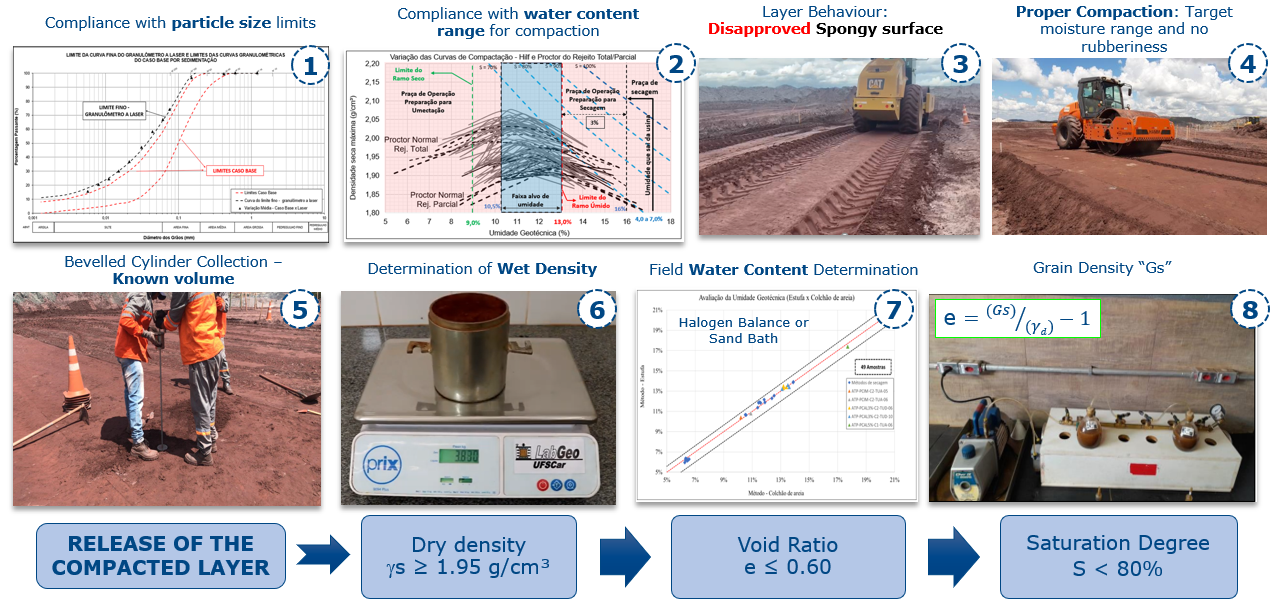
Figure 1 Summary of layer controls (BVP 2025)
2.1 Grain size distribution control
It is important to highlight that, prior to the beginning of stacking operations, 2 large-scale experimental test pads were constructed with the aim of evaluating the geotechnical behaviour of the different types of tailings generated by the processing plants at the sites. Based on these studies, 3 main types of tailings were defined according to the relative proportions of the sandy and ultrafine (slimes) fractions:
- Total tailings: a mixture composed of 80% sandy tailings and 20% ultrafine mass, with a typical ratio of approximately 80:20.
- Partial tailings: a mixture composed of 90% sandy tailings and 10% ultrafine mass, with a typical ratio of approximately 90:10.
- Sandy tailings: composed exclusively of 100% sandy tailings, with no ultrafine addition.
In order to characterise and distinguish these 3 types of tailings based on particle size distribution, the experimental test pad data showed that the 10 μm (0.01 mm) particle size diameter is an effective parameter for differentiating the materials (Figure 2). The percentage passing at this point of the gradation curve was observed as follows:
- total tailings: between 10 and 18% passing
- partial tailings: between 5 and 10% passing
- sandy tailings: less than 5 passing.
This particle size differentiation is essential for controlling material placement and for predicting the mechanical and hydraulic behaviour of the materials during operation, as verified in the experimental test pads.
It is important to highlight that differences in permeability were observed among the tailings types: the total tailings exhibited permeability on the order of 10⁻⁶ cm/s, the partial tailings around 10⁻⁵ cm/s, and the sandy tailings approximately 10⁻⁴ cm/s. Due to this significant variation, particularly between the total and sandy tailings, the latter is not used in stacking operations at the sites. The higher permeability of the sandy tailings could result in water accumulation within compacted layers after rainfall events, increasing the risk of the formation of perched water zones and localised instability.
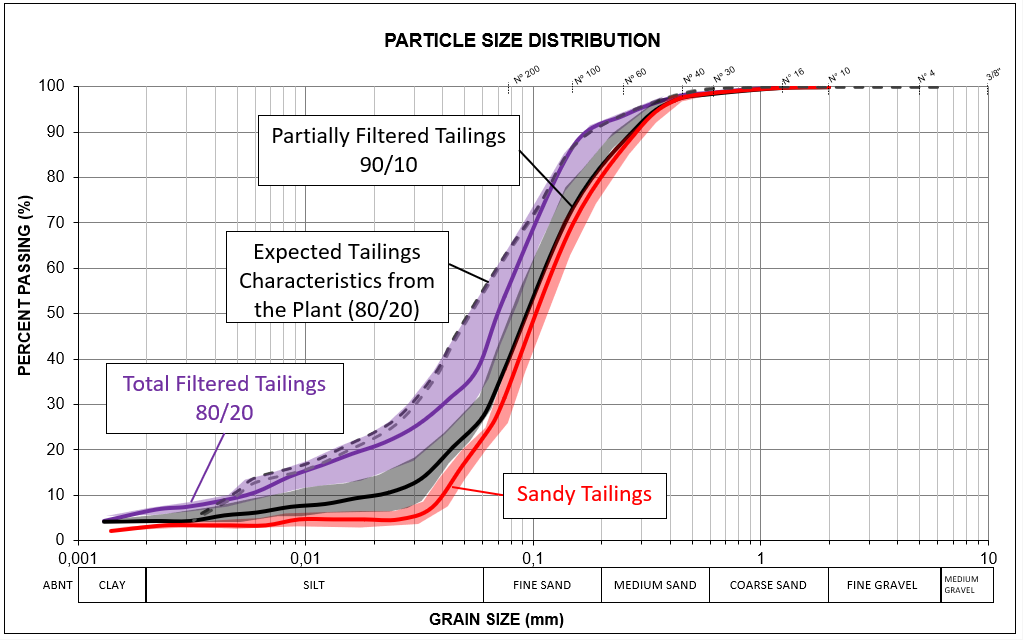
Figure 2 Typical variation of particle size distribution curves of filtered tailings (adapted from Freire et al. 2023)
Consequently, the first level of control is carried out during the filtration stage at the plant, through particle size analyses using laser diffraction techniques. The objective is to verify whether the tailings conform to the particle size limits established based on findings from experimental test fills (Pirete et al. 2023; Freire et al. 2023). Only materials that fall within the defined ranges are approved for transport to the compaction area. Tailings with grain size distributions outside the specified criteria are automatically rejected and excluded from use in the facility.
Once the approved material arrives at the compaction area, it is subjected to additional grain size analyses through sieving and sedimentation tests, performed for each deposited volume according to the operational logistics of each site. This 2-stage verification process ensures that the tailings exhibit geotechnical behaviour favourable for compaction, as well as adequate permeability characteristics, as illustrated in Figure 3.
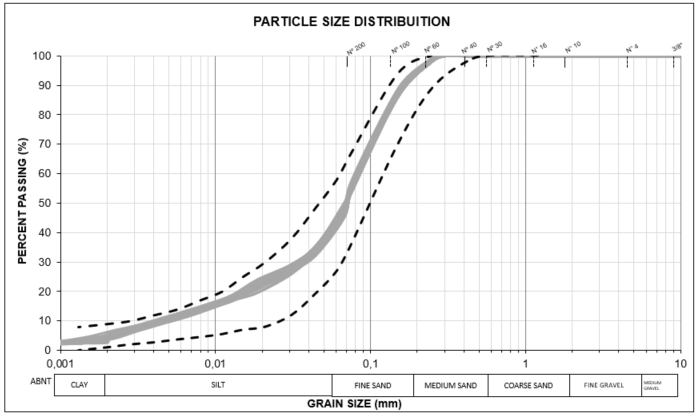
Figure 3 Grain size distribution curves by sieving and sedimentation one-month sample (BVP 2025)
2.2 Target moisture range for compaction
Based on lessons learned from 2 large-scale experimental test fills, it was found that, due to the granulometric variability and the sensitivity of the material’s optimum moisture content, it was not feasible to adopt a conventional control approach based on a single optimum moisture value, as is typically applied in conventional dam construction.
Given this limitation, a control criterion based on a target moisture range was developed, as illustrated in Figure 4. Field compaction was thus carried out within a typical range set between 9 and 13%, considered technically appropriate to ensure both material densification and satisfactory hydraulic performance.
Layers compacted outside this range present a higher risk of not meeting the maximum allowable void ratio criteria and are therefore systematically rejected and reworked according to established quality control procedures.
Although the optimum moisture content does not show significant variations over time – generally remaining within the established operational range – a considerable dispersion in the maximum dry density values has been observed. This variability is associated with fluctuations in the iron content of the tailings, which ranged from 11.5 to 30%, with an average of 19.7% and a standard deviation of 3.3%.
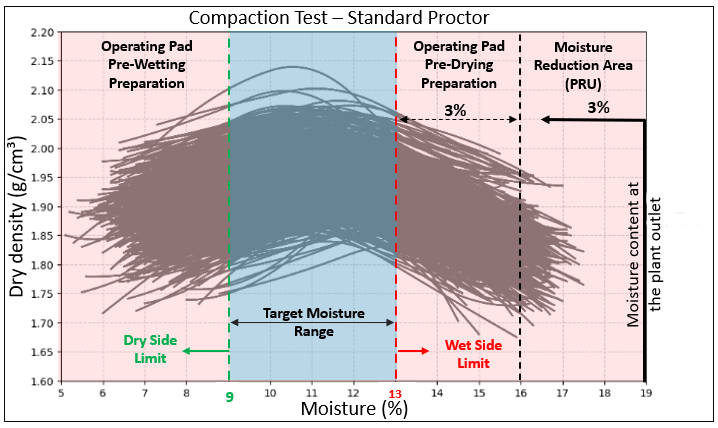
Figure 4 Moisture limits for handling and compaction of tailings at the tailings fill
For the analysis of Figure 4, it is necessary to establish some operational and technical definitions that underpin the field compaction control:
- Target moisture range: moisture content interval between 10.5 and 13%, within which effective compaction performance is achieved using 12 and 20 t smooth drum rollers operating without vibration. This range is considered ideal to ensure proper densification of the tailings.
- Dry branch: corresponds to the moisture content range between 9.0 and 10.5% within the target range. Under this condition, the use of vibration in the compaction rollers is necessary to achieve the desired compaction performance.
- Wet branch: refers to moisture contents above 13.0%, where compaction can still be performed using a smooth roller without vibration, applicable only to partial tailings, although with greater attention to the risks of reduced geotechnical performance.
- Moisture reduction area: a designated area for reducing the moisture content of the tailings when it exceeds 16%. The goal is to enable operational handling by minimising issues related to low equipment trafficability, compaction difficulties, spongy behaviour, and water exudation.
- Operation pad: the placement area where tailings, upon exiting the filtration process with moisture content below 16%, are spread for natural drying. Additionally, if the moisture content is below 9%, controlled moistening must be carried out until the material reaches the target moisture range recommended for compaction.
2.3 Field compaction procedure and visual inspection
Compaction is carried out using smooth drum vibratory rollers with an operational mass of 20 t. The number of passes ranges from 4 to 6, depending on the layer thickness, which varies between 30 and 50 cm. The operating mode – vibration on or off – is adjusted according to the moisture content of the material. When the tailings exhibit moisture between 9 and 10.5% (dry branch), vibration is recommended to ensure adequate densification. Within the target moisture range of 10.5 to 13%, compaction is performed without vibration, resulting in better performance and reduced risk of segregation or rubbery surface effects.
After compaction is completed, continuous visual inspection is performed by the field team to identify signs of poor surface compaction, such as lamination, deep wheel marks, or water exudation. These qualitative assessments are critical for early detection of zones with potential geotechnical deficiencies, even before laboratory validation.
Only after visual approval of the layer is sampling authorised for void ratio determination, a key parameter for accepting the compacted layer. If the layer does not meet visual inspection criteria (Figure 5), sections with poor performance – such as lamination, exudation, or finishing defects – are immediately reworked through re‑compaction or operational adjustments until they meet the established visual acceptance standards.
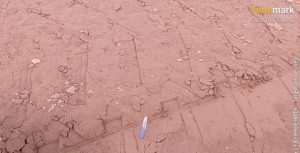
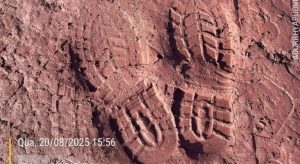
Figure 5 Layers rejected due to visual aspects. (a) Cracking at the top of the layer; (b) Spongy surface effect
2.4 Technological control: determination of dry density, moisture content, and specific gravity of solids
Following compaction and visual approval of the layers, undisturbed samples are collected using the bevelled cylinder method to determine the in situ density of the material. After weighing the cylinder, the same material is used to determine the gravimetric moisture content and the specific gravity of the solids (Gs).
The operational manuals of the sites establish a minimum testing frequency – typically one test per 1,000 m³ or 2,000 m³ of compacted material – ensuring systematic and representative verification of field performance. In a single month of operation, with an approved volume of 513,000 m³, at least 513 control tests were conducted, providing high reliability to the process and illustrating the robustness of this control.
The moisture content of the samples is determined using fast and reliable methods, such as the sand bath method or halogen moisture balance. Based on these data, the dry density of the compacted layer is calculated, which is a key parameter for evaluating compaction efficiency. Additionally, the determination of Gs, performed on the same wet density samples, allows for the precise calculation of the void ratio, an essential criterion for technical acceptance of the layer, as discussed in the next section.
2.5 Acceptance criteria for compacted layers
Each layer is only approved for the placement of the subsequent level when all of the following geotechnical criteria are simultaneously met:
- minimum recommended γd ≥ 1.95 g/cm³
- maximum e ≤ 0.60
- S < 80%
- no signs of soft, spongy behaviour or water exudation.
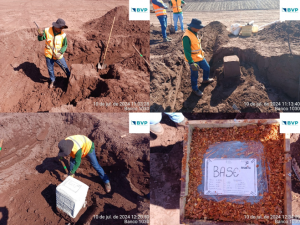
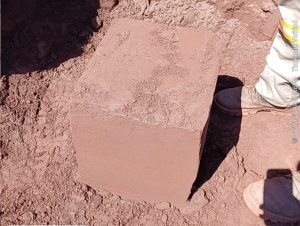
To ensure the mechanical strength of the compacted layers, the operational manual of the drained filtered tailings stacks recommends extracting one undisturbed block sample every 8 layers (approximately 2.4 m) of compacted filtered tailings (Figure 6). Each block undergoes a complete geotechnical testing program, including physical characterisation, triaxial tests (CID and CIU), permeability tests, and DSS tests.
In addition, annual CPTus are scheduled to assess the overall geotechnical performance of the structure over time, contributing to ongoing monitoring and validation of the adopted design criteria.
(a) (b)
Figure 6 Undisturbed block sampling. (a) Block extraction procedure; (b) Block ready for removal
3 RESULTS AND DISCUSSION
To validate the compaction criteria adopted in the field, laboratory tests were carried out on undisturbed samples extracted directly from the compacted layers. The tests included CIU triaxial tests with pore pressure measurement, CID triaxial tests, as well as one-dimensional consolidation and DSS tests. The investigations were conducted under confining stresses ranging from 80 to 3,200 kPa, covering the representative range of effective stresses expected at different depths in filtered tailings stack structures.
It is worth noting that, as mentioned in the introduction, BVP also acts as the EoR for 3 other sites where the same technological control methodology for filtered tailings has been implemented. Although this paper presents detailed results from a single site, quantitative comparisons with the other sites are included, aiming to highlight the consistency and robustness of the methodology across different operational contexts.
3.1 Triaxial tests: consolidated isotropic drained and consolidated isotropic undrained
This section presents the results of the triaxial tests performed on undisturbed blocks collected in the field. Overall, the observed behaviours are consistent with expectations for compacted filtered tailings. The following observations can be highlighted based on Figure 7 and 8:
- Stress–strain behaviour (CIU/CID): the deviator stress versus axial strain curves exhibit well-defined peaks, indicating that the compacted layers reached a dense state, consistent with a good degree of compaction.
- Pore pressure generation (CIU): in all undrained test specimens, negative pore pressure was observed during shearing. This behaviour aligns with the effective stress paths, confirming the dilative nature of the material.
- Volumetric change (CID): most specimens showed volumetric changes consistent with dilatant behaviour. However, one specimen exhibited contractive volumetric strain under a confining stress of 3,200 kPa. This behaviour was previously observed in the experimental test embankment and suggests that, under high stress levels, some materials may exhibit a tendency toward contraction, which is associated with the magnitude of confinement.
- Effective stress paths in the p′ – q stress space: the stress paths are plotted in terms of mean effective stress (p’) and deviator stress (q). All stress paths shifted to the right on the plot, indicating an increase in effective stress during shearing – a typical response of dilative materials.
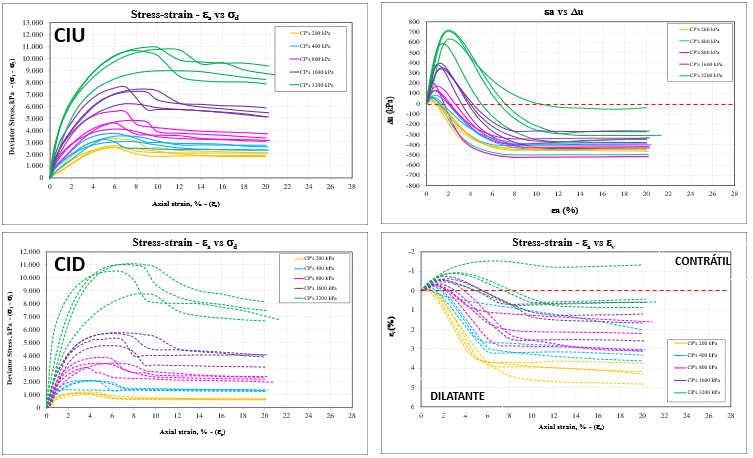
Figure 7 Stress–strain, volumetric strain, and pore pressure variation versus axial strain graphs from CIU and CID tests (BVP 2025)
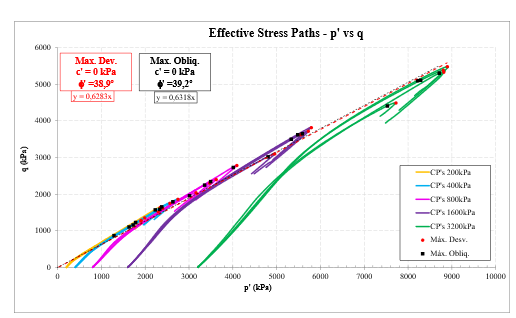
Figure 8 Stress paths from CIU tests (BVP 2025)
3.1.1 Summary of results:
- The compacted material exhibited predominantly dilative behaviour, even under high confining stresses (up to 3,200 kPa).
- The effective friction angles (ϕ) obtained exceeded the design parameters (ϕ = 30°), validating the efficiency of the compaction process and the technological control.
- Compaction within the target moisture range (9 to 13.0%) provided superior mechanical performance and stiffness.
- The effective stress paths confirmed dilative behaviour under critical conditions, reinforcing the stability of the material when properly compacted.
At the other three sites under BVP’s responsibility, the same geotechnical behaviour described in this paper was observed, reinforcing the effectiveness and reproducibility of the adopted methodology for the placement and compaction of filtered tailings. Specifically, regarding the strength parameters obtained in the triaxial tests (CIU and CID), the internal friction angle values ranged between 37.5 and 40°, indicating effective compaction and proper structuring of the compacted layers. These results confirm the quality of the construction process and compliance with the stability requirements established for the structures.
3.2 Oedometer test results: critical state line analysis
To evaluate the behaviour of compacted filtered tailings, Figure 9 presents the curves obtained from one‑dimensional consolidation (oedometer) tests, along with the critical state lines (CSL) defined for total and partial tailings from the processing plant at Site 1.
The results indicate that the tailings were compacted with ‘e’ ranging from 0.43 to 0.63, distributed according to the mean effective stress (p′). All analysed samples remain below the CSL of the total filtered tailings, which suggests that when compacted with a void ratio below 0.60, the material tends to exhibit dilatant behaviour even under high effective stresses. It is important to highlight that all evaluated samples correspond to partial filtered tailings, and that the maximum expected effective confining stress in the compacted filtered tailings at Site 1 is approximately 2,500 kPa.
This interpretation aligns with the results from the triaxial tests: the CID tests indicated dilative behaviour up to effective stresses of 1,600 kPa, while the CIU tests showed the generation of negative pore pressure, reinforcing the low susceptibility to liquefaction and the structural stability of the compacted tailings within the target operational moisture range (9–13%).
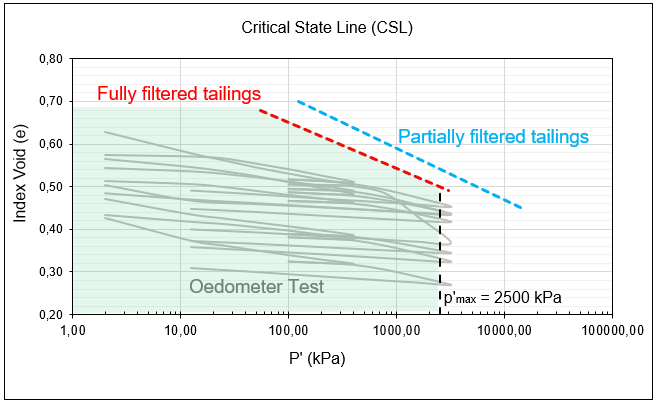
Figure 9 Consolidation curves with the critical state line (CSL)
3.3 Results of direct simple shear tests
To evaluate the undrained behaviour of compacted filtered tailings under rapid loading and low drainage conditions, DSS tests were conducted. This method adequately represents field conditions associated with the potential for flow failure, particularly under rapid static or seismic loading scenarios.
Figure 10 presents the strength envelopes obtained for different levels of effective normal stress, ranging from 200 to 2,400 kPa. A significant shear strength development was observed in all samples, with a linear increasing trend of peak shear stress with effective normal stress. The ratio between the undrained shear strength (Su) and the vertical effective stress (σ′v), expressed as Su/σ′v, was used to evaluate the material response under undrained loading conditions. The regression equation of the peak points suggests the presence of apparent cohesive strength along with a strong frictional component.
It is important to highlight that, unlike triaxial tests, Figure 10 does not allow the interpretation of effective stress paths as indicative of contractive behaviour. In the DSS test, the constant volume condition imposed on the specimen – typical of undrained tests – causes the effective stress path to systematically shift to the left in the Su–σ′v plane. This shift results from the increase in pore pressure during shearing, which reduces the effective normal (confining) stress without allowing volumetric strain. Thus, the observed stress path orientation is an inherent feature of the DSS method and should not, in isolation, be taken as evidence of contractive or dilative behaviour of the material.
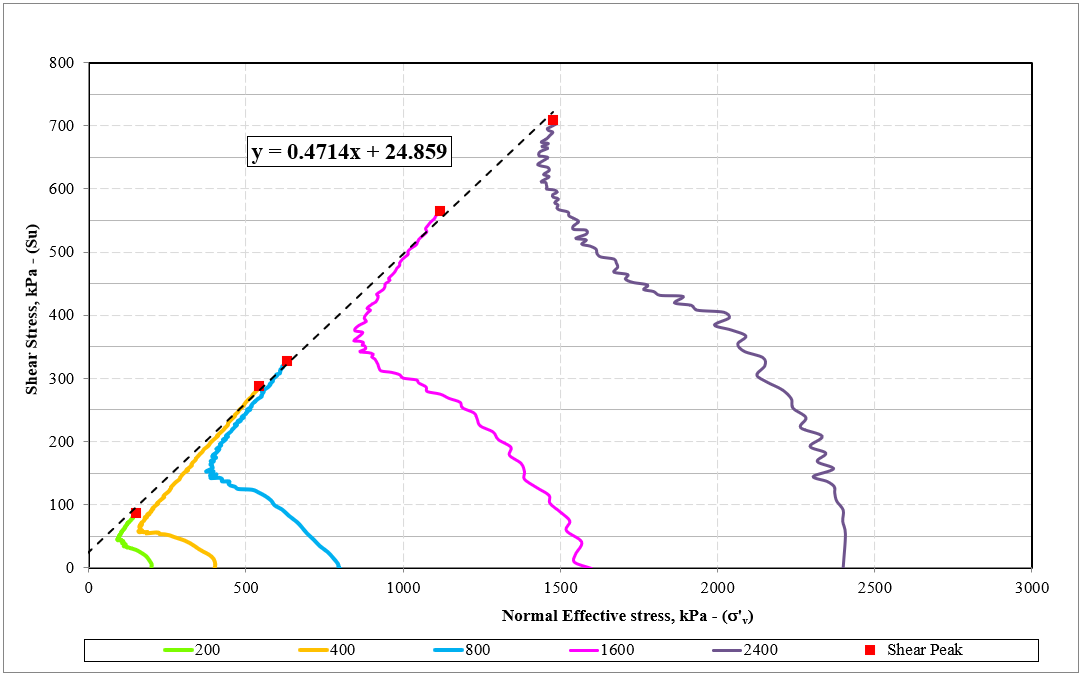
Figure 10 Stress paths from direct simple shear tests, showing failure as defined by peak undrained shear strength ratio (BVP 2025)
The results obtained from the DSS tests indicate that the compacted filtered tailings exhibit undrained behaviour consistent with dense materials and low susceptibility to instability under rapid loading conditions. The average ratio between the Su/σ′v (≈ 0.47) is substantially higher than the typical values associated with liquefiable materials.
For comparison, Olson & Stark (2002) report peak Su/σ′v values ranging from 0.05 to 0.12 for liquefiable sands and silts observed in historical failure cases. Kulhawy & Mayne (1990) suggest a typical range of 0.20 to 0.40 for natural or compacted soils. In the other 3 sites under BVP’s responsibility, the peak Su/σ′v values obtained from DSS tests ranged between 0.35 and 0.45. These values remain substantially above the commonly accepted thresholds for liquefiable materials, further reinforcing the evidence that the compacted tailings present stable behaviour even under undrained loading.
3.3.1 Summary of results:
- During the tests, pore pressure was rapidly mobilised in the early stages of deformation, but without compromising the mobilised shear strength, which remained high throughout the test. This behaviour is typical of dense and dilative materials, with low propensity for liquefaction or flow failure, even under undrained conditions.
- According to Olson & Stark (2002), the failure modes represented in DSS tests are particularly relevant for assessing susceptibility to static liquefaction. Therefore, the results indicate that the compacted filtered tailings studied show satisfactory geotechnical performance under critical conditions, with low susceptibility to instability.
3.4 Compacted filtered tailings layers, piezocone penetration tests results
In order to complement the geotechnical assessment of the compacted filtered tailings layers, CPTu were conducted at various points within the structure. The CPTu-12 test (Figure 11 and 12), highlighted in this section, was carried out in an area composed exclusively of tailings placed during the period in which BVP served as the EoR. The sounding reached a depth of 6.90 m, being interrupted due to high tip resistance values that exceeded the capacity of the equipment used. The investigated profile showed a consistent vertical evolution of geotechnical properties, reflecting the typical behaviour of well‑compacted filtered tailings.
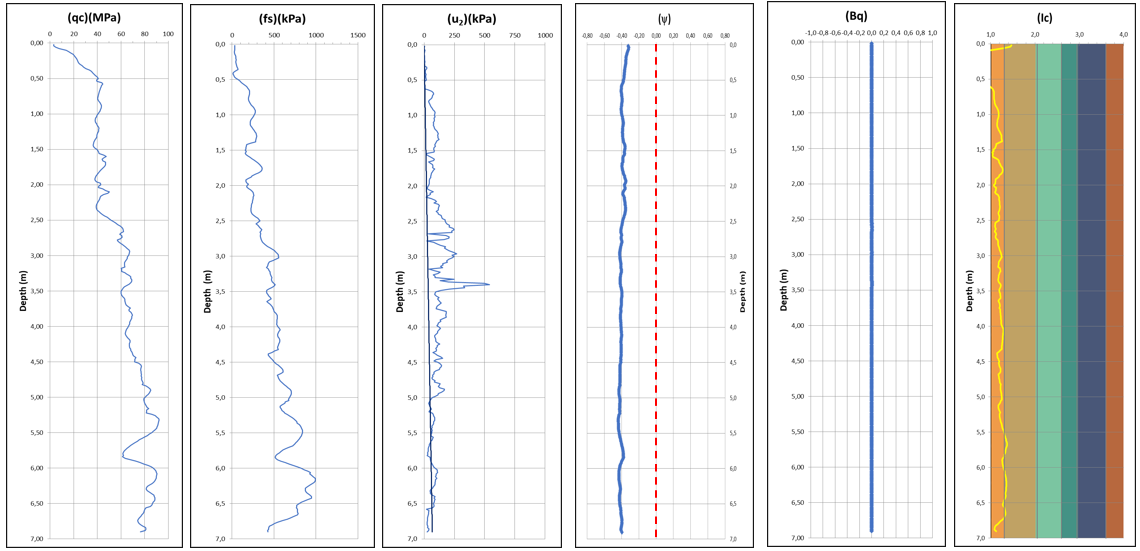
Figure 11 CPTu-12 Results (BVP 2025)
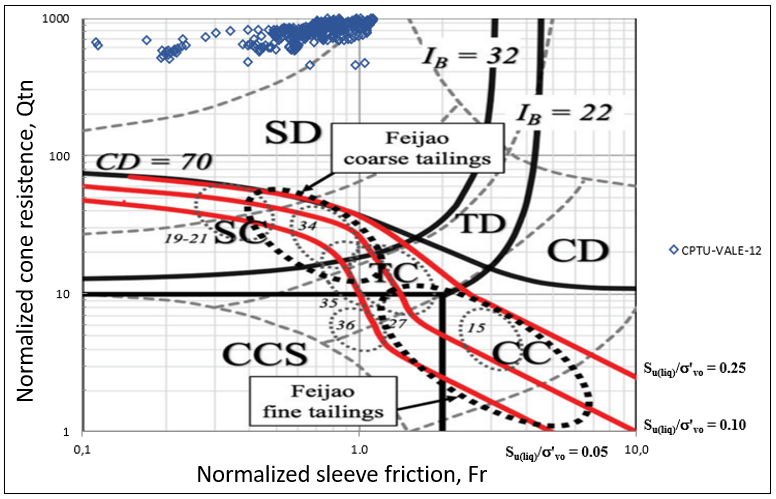
Figure 12 Soil behaviour type (SBT) chart (adapted from Robertson 2016) – CPTu-12
3.4.1 Compacted filtered tailings layers, piezocone penetration test summary of results:
- The corrected tip resistance (qt) values ranged from 3.05 to 92.14 MPa, showing a clear trend of increasing with depth. This behaviour indicates progressive improvement in material densification, consistent with the literature (Robertson 2010), which associates qt values greater than 20 MPa with dense or compacted soils, especially when combined with low normalised friction ratios (Fr).
- The porewater pressure (u₂) ranged from −0.89 to 540.54 kPa, with occasional peaks that may be attributed to interbedded fines. These peaks may also be linked to partial saturation of the piezometer element, as discussed by Mayne (2007), and are not necessarily indicative of actual excess pore pressure in the soil.
- The pore pressure ratio (Bq), defined as the normalised excess pore pressure response during penetration, remained close to zero throughout the profile, indicating drained or partially drained behaviour during testing – typical of dense or well-compacted soils, as noted by Lunne et al. (1997) and Robertson (2010).
- The state parameter (ψ), defined as the different between the current void and the void ratio at the critical state, showed negative values along the entire profile, characterising the material as being in a subcritical state, i.e. above the critical state density. This behaviour aligns with the dilative response observed in the triaxial tests.
- The soil behaviour type index (Ic), derived from normalised cone parameters according to Robertson (2016), ranged from 0.37 to 1.39, indicating the presence of silty-sand to sandy-silt materials, consistent with the composition of the tailings used.
- The soil classification using the SBT method (Robertson 2016), presented in Figure 12, places the CPTu-12 data predominantly in the region above the ‘Feijão coarse tailings’ line – a zone representative of dense and dilative granular soils, with high normalised cone resistance and low normalised friction ratio.
- The absence of data in sensitive zones (such as sensitive clay [SC] or contractive clay [CC]) reinforces the geotechnical stability of the compacted layers, dismissing the possibility of critical or collapsible behaviour under loading.
Regarding the CPTu tests, the comparison presented in this study is limited to one of the sites, as the other 2 facilities, although already in operation for nearly a year, have not yet conducted this phase of geotechnical characterisation. However, these tests are scheduled to be performed next year.
At the analysed site, the results confirm the same geotechnical behaviour described throughout this paper. qt ranged from 3.05 to 80 MPa, showing a clear increase with depth. Bq remained zero throughout the profile, while ψ exhibited negative values, indicating a dilatant behaviour of the material. Ic ranged from 0.5 to 2.5, indicating the predominance of silty-sand to sandy-silt materials – consistent with the composition of the tailings used at both sites.
These results reinforce the effectiveness of the adopted compaction methodology and demonstrate its technical reproducibility under varying operational conditions.
4 Conclusions
This study aimed to evaluate the geotechnical performance of iron ore tailings layers placed through drained stacking, under rigorous quality control and compaction within the optimal moisture range (9–13%). Laboratory and field analyses verified the efficiency of the execution process and the adequacy of the mobilised geotechnical parameters in relation to applicable stability criteria. The main conclusions are summarised as follows:
- The CID and CIU triaxial tests indicated predominantly dilatant behaviour and negative pore pressures, even under high confining stresses. The effective friction angle ranged from 38.9 to 39.4°, exceeding the design value of 30°, which reflects a significant strength gain achieved through efficient compaction. These findings highlight the critical importance of controlling moisture and dry density during execution.
- The CPTu-12 test, conducted in a section with tailings compacted showed a positive evolution of geotechnical properties with depth. qt values above 20 MPa, Bq values near zero, and a negative state parameter (ψ < 0) indicate behaviour consistent with dense materials and low susceptibility to liquefaction.
- The material classification on the SBT chart placed the tailings predominantly in the region above the Feijão coarse tailings, characterised by high qt and low normalised friction ratio Fr, consistent with dense and dilative sands.
- The DSS tests indicated an average undrained shear strength ratio Su/σ′v ≈ 0.47, which is higher than typical thresholds for liquefiable sands and consistent with compacted, stable materials. The mobilised strength remained high even under rapid loading conditions, demonstrating low susceptibility to flow failure.
Overall, the results confirm the effectiveness of the technological control implemented, highlighting the technical feasibility of filtered tailings disposal via drained stacking with compaction within controlled moisture and density ranges. Continued monitoring and periodic testing are recommended to enhance the long-term geotechnical reliability of the structure.
Additionally, as demonstrated throughout this paper, comparisons between mechanical strength tests (triaxial and DSS) and field tests (CPTu) across different sites illustrate the repeatability and robustness of the compaction process. This consistency confirms that when operational parameters are strictly controlled, technically sound performance can be achieved, ensuring the stability of projects utilising drained stacking of compacted filtered tailings.
Acknowledgement
The authors would like to express their gratitude to the technical support team assisting the EoR, with special recognition to geotechnical engineers Karine Saraiva, Pedro Silva, Caroline Zeferino, and Vinicios Lanna for their continued support throughout the monitoring of the evaluated structures. Special thanks are also extended to the ATC team, who currently serve as the EoR’s eyes in the field and perform outstanding technical oversight. These dedicated professionals include Mateus Leite, Rafael Costa, Wallace Barros, Maria Meireles, Gustavo Silva, Markus Dias, Maria Tereza, Laíza Arantes and Cayke Allan.
The authors also thank BVP and VALE for providing the images used in this work, as well as for the technical and institutional support throughout the monitoring process.
References
BVP 2025, Monthly EoR reports, Belo Horizonte.
Freire, A, Pirete, W, Cella, P, Silva, D, Andrade, P & Rissoli, A 2023, ‘Compaction performance of iron ore tailings mixture in the Iron Quadrangle’, Proceedings of the 1st International Conference on Geotechnics of Tailings and Mine Waste, Ouro Preto.
ICMM 2020, Global Industry Standard on Tailings Management, London.
Kulhawy, FH & Mayne, PW 1990, Manual on Estimating Soil Properties for Foundation Design, Electric Power Research Institute, Palo Alto.
Lunne, T, Robertson, PK & Powell, JJM 1997, Cone Penetration Testing in Geotechnical Practice, Blackie Academic & Professional, London.
Mayne, PW 2007, Cone Penetration Testing, NCHRP Synthesis 368, Transportation Research Board, Washington.
Olson, SM & Stark, TD 2002, ‘Liquefaction resistance using CPT and field case histories’, Journal of Geotechnical and Geoenvironmental Engineering, vol. 128, no. 9, pp. 755–764.
Robertson, PK 2010, ‘Interpretation of cone penetration tests – a unified approach’, Canadian Geotechnical Journal, vol. 46, no. 11, p. 1337–1355.
Robertson, PK 2016, ‘Cone penetration test (CPT)-based soil behaviour type (SBT) classification system — an update’, Canadian Geotechnical Journal, vol. 53, no. 12.
Pirete, W, Cella, P, Freire, A, Silva, D, Andrade, P, Augusto, T & Rissoli, A 2023, ‘Mechanical performance of sandy and ultrafine tailings mixtures in experimental landfills’ Proceedings of the 1st International Conference on Geotechnics of Tailings and Mine Waste, Ouro Preto.